Statement/27 March 2024
The Azarbaijan Movement and the passage of the first trial
On the first anniversary of its founding, the movement sets out why it was formed, names its political bureau and advisors, and publishes the charter and founding statutes adopted in Paris on 2 February 2009.
Statement of the Azarbaijan Movement
14 Farvardin 1388
Come, let us scatter roses and pour wine into the cup.
Let us split the roof of heaven and draw a new design.
If sorrow raises an army to spill the blood of lovers,
I and the cupbearer will join together and overthrow its foundation.Hafez
One year has passed.
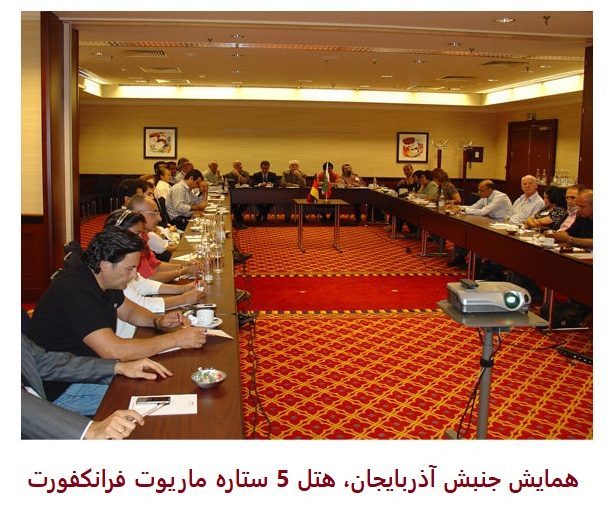
On such a day, a group of the Iran-loving children of Azarbaijan resolved to found a movement to guard the integrity of the homeland, dearer than their own lives, and to realize the long wish of the Iranian nation for democracy in Iran. After a short period of preparation, a two-day gathering placed on the agenda, alongside a committee to prepare a “national congress of Iran,” the ordering of a charter and founding statutes on which the Azarbaijan Movement for Democracy and Integrity of Iran, and its organizational chart, would stand.
Today the Azarbaijan Movement is organized on that foundation, and it goes forward with measured and steady steps.
When we look at the growth of the history and civilization of nations, we see that everything rises from earlier foundations. In our country, Iran, one of the cradles of world civilization, we witness how our ancestors, time after time, after being turned to ash, rose again like the phoenix and freed themselves and their country from the oppression of foreigners and of those who serve foreigners.
Through the rises and falls of Iran’s history, Azarbaijan and Azarbaijanis have many times begun, and finished, national movements of liberation. Is the repetition of history possible? Were our noble ancestors much braver, wiser, and more eloquent than we are, or, when their soil, their bread, their security, and their freedom were in danger, did they, at the moment of deciding how to defend themselves and the realm of Iran, set aside the calculating option and put self-sacrifice and national solidarity in its place?
The battle of Chaldiran can be named here. If twenty-seven thousand Iranian soldiers, their lives in their hands, had not fought bravely to the last man against two hundred thousand Ottoman troops, we Azarbaijanis would not today be compatriots of the people of Yazd and Khorasan. We would be like many of our old compatriots who have forgotten that, not so long ago, our mothers and fathers lived for centuries in one frame, under one flag, and with one proud culture, and some of whom, for various reasons, have even become our enemies.
Boundless greetings and thanks from us, the pure-hearted children of the land of Iran, to all those brave men who gave their lives at Chaldiran and who, in deciding to defend the integrity of this ancient land, never thought of the result of two plus two.
According to the will of the founding group of the Azarbaijan Movement at the Frankfurt gathering, after the charter and founding statutes had been ordered on the basis of the people and the homeland, equal citizenship, and the guarding of Iran’s integrity, and after they had been published for one month under the eyes of the wise inside and outside the country so that everyone’s views could be received, the work was completed in the course of the meetings in Paris and Berlin, and in consultation on the charter and the founding statutes and the choice of the members of the political bureau. At its first official meeting this bureau will appoint the spokesperson of the movement and the executive board.
Learning from its mothers and fathers, and relying on the matchless and proud culture of their eternal country, Iran, the Azarbaijan Movement for Democracy and Integrity of Iran intends, with the help of that great and civilization-making nation, especially the people of Azarbaijan across the country, and by following its own homeland-wide and people-wide charter and founding statutes, and with the matchless power recorded in the history of Iran from Atropatene to Sattar Khan and Baqer Khan, to lay its strong and transforming political, economic, and social hand on the worn, stranded, Iran-hating, and people-burning body of the Islamic government. With the solidarity of the other lineages and peoples of Iran, as in the Constitutional Revolution, it will bring down the loose and rotten foundations of the government of the Supreme Leader, and once more, while guarding territorial integrity and national unity, it will win the jewel of freedom and democracy for its dear country, Iran. It is certain that in the destiny of nations no force is as decisive as the nations themselves.
Long live freedom and democracy.
Long live Iran and the Iranian nation.
Political bureau of the Azarbaijan Movement for Democracy and Integrity
14 Farvardin 1388
Organizational chart of the Azarbaijan Movement
Political bureau
- Dr Nosratollah Jahanshahlu Afshar, head of the political bureau
- Dr Aida Azarpourkhani, member of the political bureau
- Mr Maziar Azarbaijani, member of the political bureau
- P–44 Iran, member of the political bureau
- A–15 Iran, member of the political bureau
- Mr Lohrasb Zeinali, member of the political bureau
- Mr Khosrow Chavoshi, member of the political bureau
- Mr Saeed Mousavi, member of the political bureau
- Engineer Sina Ziaei Yekta, member of the political bureau
Advisors
- Dr Cyrus Amoozgar, political advisor
- Homer Kodban Abrahamian, cultural advisor
- Dr Behrouz Behboodi, political advisor
- Ms Paridokht Amin, advisor for women
- Z–45 Iran, political advisor
- J–12 Iran, labor advisor
- S–14 Iran, student advisor
- Dr Zartosht Sotoudeh, cultural advisor
- Engineer Amir Shajareh, political and publicity advisor
- Sh–7 Europe, political advisor
- Dr Hassan Mansour, economic advisor
- Dr Parviz Adl, advisor for politics and international relations
Charter of the Azarbaijan Movement
We seek to preserve the independence, territorial integrity, and national unity of our country, Iran.
We do not support any particular line of thought. Our effort in this movement is that all Iranians reach freedom and equality according to the Universal Declaration of Human Rights, and that the form of government be decided by the free vote of the Iranian nation.
We believe that Iran is the shared home of the Iranian nation. This single nation, in addition to its shared national language, Persian, speaks various languages and dialects. It is a composition of ethnic diversity. It is attached to religions, or to none, and to various rites, beliefs, and ideas. It includes tribes, clans, families, and varied peoples, and this large and beautiful miniature cannot be reduced to any one of these parts.
We believe that the Iranian nation has the right to live in its shared and ancestral home according to the Universal Declaration of Human Rights and the social, cultural, and economic covenants, and the other annexes of this great body of texts, which is one of the best achievements of human civilization.
We believe that the Iranian nation has the right to determine the form of its future system, in a democratic and free atmosphere, free of every kind of fear and pressure, on the principle of the separation of religion from government, and that this government, arising from the will of the nation, shall recognize the equal rights of every person of the Iranian nation, with respect for every linguistic, confessional, and ethnic variety that belongs to the national whole.
We intend, once more, like our ancestors the Atropatids, the Khurramites, the Safavids, and the Sattar Khans, by removing the Islamic Republic, to secure the independence, territorial integrity, and national unity of our homeland, Iran. We are certain that in the destiny of nations no force is as decisive as the nations themselves.
Founding statutes of the Azarbaijan Movement
Chapter One: Definitions and general provisions
Name and emblem
The name of this organization is the “Azarbaijan Movement for Democracy and Integrity of Iran,” which in these founding statutes is hereafter called the movement.
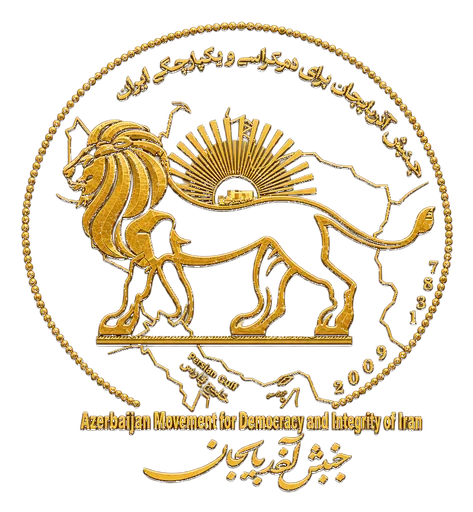
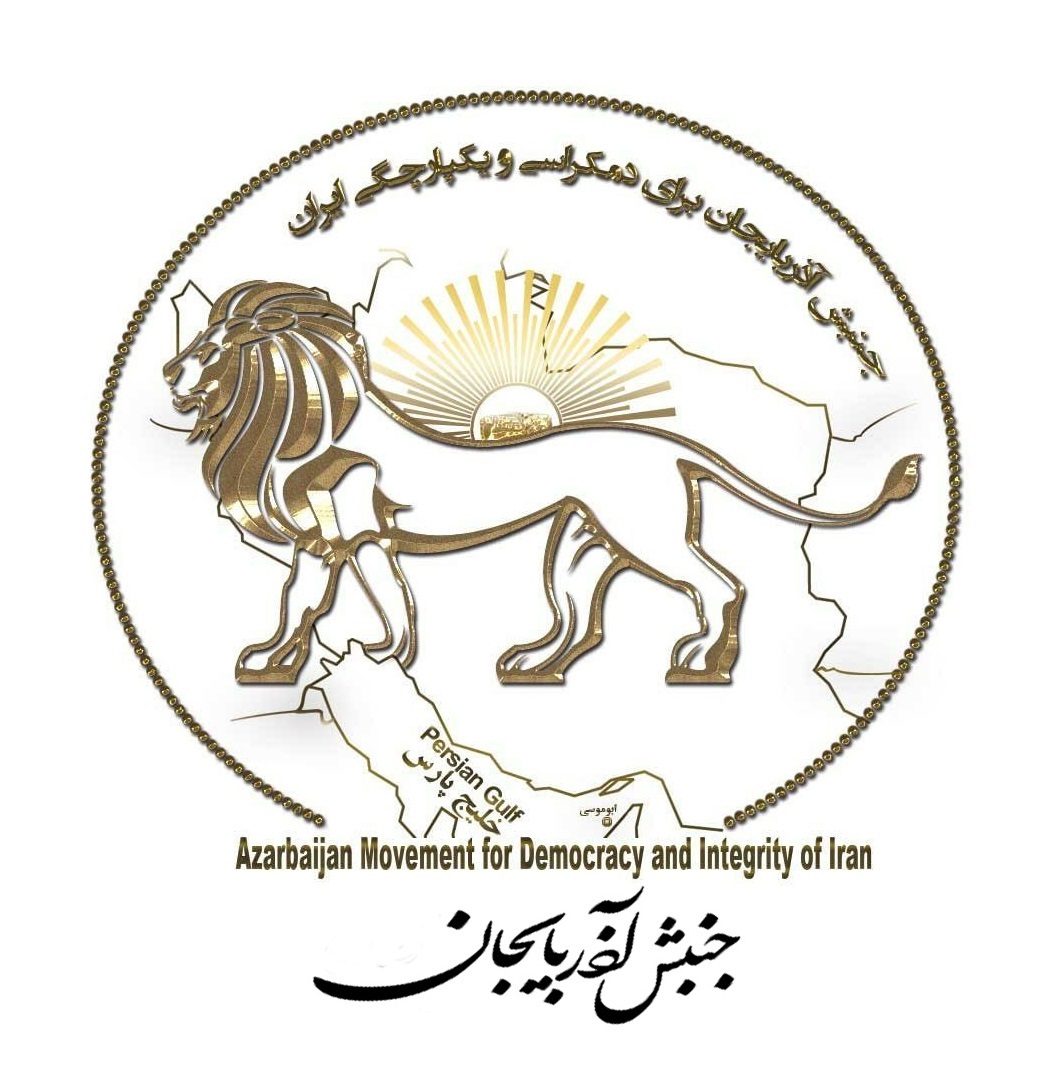
The emblem of the movement is the map of Iran, together with the Caspian Sea and the Persian Gulf, in blue. Across the whole map stands a stone lion without a sword, facing west, with the lion’s head in Azarbaijan. A sun shines on the lion’s back, and the Charter of Cyrus the Great is set inside the sun.
The color of the map and of the stone lion, in light and shade, and of the tablet, is the color of the sun, and the writings of the Charter of Cyrus and of the Persian Gulf each stand in their own place.
The organizational color of the movement is white.
Article 1. Field of activity
Until political organizations opposed to the Islamic Republic can work inside the country, the official center of the movement will be abroad. Observing these bylaws, the movement will create cells and regional offices abroad, and cells inside the country. When the minimum necessary conditions appear in the country, internal offices will also be established.
Article 2. Aims
The aims of the movement are:
- First, to work for the removal of the Islamic Republic, and then to act for the formation of a national constituent assembly, in order to draft a new constitution based on the Universal Declaration of Human Rights and its annexes, by the free vote of the nation.
- To work for the formation of a democratic government based on the constitution adopted by the assembly named in the previous paragraph, whose type is determined by the votes of the majority of the Iranian nation in a free referendum, so that on that basis territorial integrity, national unity, the national interest, peaceful relations with the international community, and the happiness and welfare of the peoples of Iran are secured and guaranteed.
- To reach the ideals named above, the movement must put on its agenda the efforts needed to draw in as many Iranian compatriots as possible, Azarbaijanis in particular.
Chapter Two: Organs of the movement
Article 3
The organs of the movement are:
- Congress
- The advisors
- The political bureau
- The executive board
- The regional office
- The cell
Article 4. Congress
Congress is the highest authority of the movement. It ordinarily meets once every two years. When necessary, and with the approval of the political bureau, it may meet in extraordinary session.
The voting members taking part in Congress are the advisors, the members of the political bureau, the members of the executive board, the heads of the regional offices, and the officers and members of the cells, according to the relevant regulations.
Guests invited to Congress may take part in the current discussions, but they do not take part in votes.
Congress is conducted by a presidium of one chair, two deputy chairs, and two secretaries, elected by the members of Congress.
The invitation to Congress, under Article 7, is sent by email and published on the movement’s website, except where ordinary post is necessary.
Article 5. Duties and powers of Congress
- To adopt the proposed agenda.
- To adopt and amend the charter, the bylaws of the movement, and the regulations for convening and conducting Congress.
- To adopt the methods and programs of the movement proposed by the political bureau or by the commissions of Congress.
- To elect, dismiss, and accept the resignation of the members and the head of the political bureau, and of the advisors.
- To examine and adopt the resolution of Congress.
- To receive the annual report of the movement’s work, presented by the political bureau.
- To decide on dissolving the movement, or on merging it or taking part in another organization, and to elect a board to examine the movement’s documents in the event of dissolution.
Article 6. Validity of sessions and votes in Congress
Sessions of Congress are quorate with the presence of at least two-thirds of the voting members of Congress, and its decisions are adopted with the votes of at least two-thirds of the members present.
In sessions of Congress, only subjects placed on the adopted agenda are discussed.
The proposed agenda is given to participants, together with the political bureau’s invitation, through the executive board, one month before Congress. If, within that month, a new proposal or document is submitted for discussion at Congress by at least five members of the movement, and no later than twenty days before Congress, then, after the political bureau approves it, the secretariat must publish it on the movement’s website in the fifteen days before Congress opens, unless publication is not in the movement’s interest.
Article 7. Advisors
Congress elects a number of the movement’s experienced and thoughtful members to the group of advisors. The advisors are responsible for giving the political bureau and the executive board consultative opinions on the various fields of the movement’s operations and activities, in line with its aims. The number of advisors varies with the course of the movement’s activity. After Congress, and with the confirmation of the political bureau, new people may join the group of advisors.
Article 8
Advisors may attend every organizational meeting of the movement without a vote.
Article 9
The executive board may, through the political bureau, draw on the specialist opinions of the advisors.
Article 10. Political bureau
Besides the head of the bureau, the political bureau has seven principal members and two alternates, elected by Congress from among active and knowledgeable members for a term of two years.
Article 11. Duties and powers of the political bureau
- To supervise the proper carrying out of the decisions of Congress, and to follow them up.
- To lead all political and executive activities of the movement according to the policy lines adopted by Congress.
- To carry out paragraph 4 of the duties of Congress until the next Congress is formed, and to elect, dismiss, and accept the resignation of members of the executive board and of the directors of regional offices.
- To examine and approve the executive board’s proposal to establish or dissolve regional offices or cells of the movement.
- To receive the necessary reports from the executive board and to comment on them.
- To interpret the charter, the bylaws, and the decisions of Congress where they are ambiguous.
- To approve the financial resources and the annual budget of the movement, and to decide the annual dues of the movement’s cells.
- To prepare the annual report and present it to Congress.
- To prepare what is needed to hold ordinary and extraordinary congresses.
- To publish the decisions of Congress and of the political bureau, which shall count as their official communication to every member of the movement.
- To issue and communicate the decrees of those elected by Congress.
- To examine and approve contacts or joint actions with other parties, organizations, and political figures.
- To choose the holders of authorized signatures in the financial affairs of the movement.
- To decide how the organizational color of the movement is used, and to communicate that decision to every organizational unit.
- To prepare and issue the statements and analyses of the movement according to its adopted policies and according to political, social, and economic developments in the world, the region, and Iran.
- To examine the establishment of necessary contacts with other parties, organizations, and political figures inside and outside the country, and to propose them to the political bureau.
- To present periodic reports to the members of the movement.
- To draft and adopt the regulations needed for meetings of the political bureau.
- To carry out studies that are needed and, where necessary, to form specialist groups.
- To elect the head of the executive board and new advisors.
Article 12
The official spokespersons of the movement answer for its views and positions on various matters. Two members of the political bureau undertake the duty of spokesperson.
Article 13
At the first meeting of the political bureau, a spokesperson and a deputy spokesperson are elected. At the same meeting one member of the political bureau is charged, as head of the executive board, to choose the members of that board within two weeks at most, on the basis of the movement’s operational programs, and to introduce them to the political bureau.
Article 14. Executive board
Besides the head of the board, a number of capable members of the movement and heads of regional offices join the executive board, as principal members and alternates, on the head’s proposal and with the approval of the political bureau, for a term of two years. The number of members of this board varies with the movement’s activity.
Article 15. Duties and powers of the executive board
- To carry out the decisions of the political bureau.
- To coordinate the activities of the units under the executive board’s supervision.
- To supervise the precise application, by the units in its charge, of the financial, administrative, technical, communications, and security regulations, to examine their weaknesses, and to offer the measures needed to improve them.
- To establish a network for receiving and sending information, and to provide what is needed for the safety of information.
- To organize the movement’s publications, written, audio, visual, and otherwise, in Iranian and foreign mass media and on the internet, and, where needed, to translate them into the common languages of the world.
- To prepare and present periodic reports of the activities of offices and cells to the political bureau.
- To form specialist groups for protection, technical work, finance, administration, logistics, publicity, and execution.
- To cooperate with the political bureau on the movement’s publications.
- To draft the regulations needed for organic communication among the executive units of the movement.
- To supply the equipment, technical, financial, and administrative needs of the units.
- To prepare and adopt the regulations for meetings of the executive board.
- To draft regulations on the limits of the duties, responsibilities, and powers of honorary members of the movement.
- To examine the consultative opinions of the advisors on the activities of the executive board.
Article 16. Regional offices
Regional offices in foreign countries are established according to the number of members of the cells of that region, on the proposal of the executive board and with the approval of the political bureau. Each office is run by a head and a deputy head, chosen on the confidence of the cells of that region, introduced to the executive board, and appointed by the political bureau for one year. The administrative staff of each office may rise to five people, according to the volume of the region’s activity.
Article 17
The duty of each regional office is to help advance the aims of the movement by spreading the movement’s views and positions among the inhabitants of its geographic region, by recruiting members, and by supporting the operations and activities of the members of the cells under its supervision, and, above all, by observing security in the acts and operations undertaken to advance the aims of the movement. The work of drafting the related regulations and training must begin, and be completed, in the shortest time, given its importance and necessity.
Article 18. The cell
The cell is the first organ of the movement. It is formed, with a number of members, inside and outside the country, according to the internal regulations. One experienced member, by the majority vote of the members of that cell, takes responsibility for the cell and represents it. The minimum membership of each cell is three. All officers of active cells, and also the active members of cells, are invited to the movement’s Congress. The regulation required for this is drafted by the executive board.
Article 19
Given the conditions ruling the country, and in order to observe security, all decisions, regulations, and correspondence concerning the inside of the country are classified documents of the movement. Access to them follows instructions prepared by the executive board and approved by the political bureau.
Chapter Three: Membership
Article 20
The conditions of membership are:
- A firm belief in independence, territorial integrity, national unity, and the establishment in Iran of a democratic system that is neither religious nor ideological.
- A firm belief in civil disobedience as the method of struggle against the Islamic Republic.
- A firm belief in the Universal Declaration of Human Rights and the covenants annexed to it.
- Acceptance of the charter and bylaws of the movement, and a commitment to observe them and the decisions of the movement.
- A commitment to observe the security and disciplinary principles of the movement.
- A minimum age of sixteen.
- All Iranians, and friends of Iran throughout the world, Azarbaijanis in particular, may become official or honorary members of the movement.
- Payment of the annual dues set by Congress.
Article 21
Note. Membership in other parties and political organizations is not a bar to membership in the movement, provided that their line and the aims of their struggle, both in their documents and in their actions and operations, do not conflict with the movement.
Advisors, members of the political bureau and of the executive board, and the officers of regional offices and cells may not hold, in other political organizations, responsibilities of the first political or organizational rank, or the role of spokesperson.
Article 22
Examination of the admission of members is the duty of the cell officer, and a final view depends on the agreement of the executive board.
Article 23
Membership ends if one of the following conditions is met:
- The member resigns or dies.
- The member fails in organizational duties, as confirmed by the executive board.
- Membership is cancelled on a reasoned proposal of the relevant regional office or cell, approved by the executive board.
- If a member complains of the end of their membership, the complaint is examined first in the executive board and, at the final stage, in the political bureau.
Chapter Four: Other matters
Article 24
Given modern technologies of communication, such as virtual rooms, the internet, and email, the movement should put the fullest use of these means on its agenda.
Article 25
The general principle in every election or appointment in the units of the movement is merit, and there is no bar to electing or appointing the same person again, and repeatedly, to a duty or a responsibility.
Article 26
All financial documents, binding instruments, and banking operations are valid with the signature of the head of the executive board and one other authorized signature.
Article 27
The financial resources of the movement are provided by dues and by the help and gifts of natural and legal persons who support the movement. Gifts and help must be received without any effect on the movement’s policy and decisions. The executive board presents a full report of gifts and help received to the political bureau.
Article 28
If the movement is dissolved, a liquidation board elected by the general Congress settles the property and assets of the movement and its financial obligations, takes the other legal steps required, and within six months at most prepares a report of its work and publishes it in the mass media.
Article 29
The movement’s website is its official organ. It is run by the executive board under the supervision of the political bureau. For easier access by members and visitors, the movement’s internet network uses various extensions, all connected to one network. Electronic correspondence of the movement is valid at the addresses introduced for that purpose. Valid mail prefixes are introduced on the movement’s website and thereby become official. The executive board is responsible for the proper running of the website and for all internet communications.
Advisors, members of the political bureau and of the executive board, and the regional offices are introduced on the movement’s website.
Article 30
These bylaws, in 31 articles and one note, taking account of amendments proposed by people of knowledge and by those attached to the movement, were adopted at the meeting of 2 February 2009 in Paris, and from now on they are in force as the bylaws of the movement.
Long live Iran and the Iranian nation.
Political bureau of the Azarbaijan Movement for Democracy and Integrity of Iran